
|
#1 - 5/23/26 - Holt with Elephante on the flight from Denver, Colorado USA to Rome, Italy.
|
|

|
#2 - 5/23/26 - 10 hours later, Holt with Elephante on the flight from Denver, Colorado USA to Rome, Italy.
|
|
|
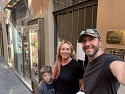
#3 - 5/26/2026 - Holt, Amanda and Joe A. outside their apartment at Daplace Apartments on Via delle Carraozze, 44 just a few blocks from the Spanish Steps. Be sure to view the Video Page to see the inside of the apartment.
|
|

Photo by Joe R. Luciano
|
#4 - 6/14/1999 - FLASHBACK in June 1999 Cathy, Joe R. and Joe A. went on a trip to Italy and, at the end, stayed at the Pensione Erdarelli in Rome, just blocks from the Spanish Steps and the apartment where Amanda, Joe A. and Holt stayed in 2026 - 27 years later! Katia Erdarelli, Joe A. and Cathy in front of Pensione Erdarelli (now Hotel Erdarelli)
|
|
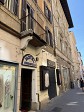
Photo by Joe A. Luciano
|
#5 - 5/25/2026 -Today Hotel Erdarelli (formerly Pensione Erdarelli) in Rome
|
|

|
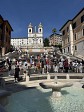
#6 - 5/24/2026 - Walking distance from Daplace Apartments, where Amanda, Joe A. and Holt stayed in May 2026, and the Erdarelli Hotel (formerly Pensione Erdarelli), where Cathy, Joe R. and Joe A. stayed in June 1999
|
|
|
#7 - 5/24/2026 - The Spanish Steps in Rome just blocks away from the apartment where Joe A., Amanda and Holt were staying
|
|

|
#8 - 5/24/2026 - The Spanish Steps in Rome just blocks away from the apartment where Joe A., Amanda and Holt were staying
|
|

|
#9 - 5/24/2026 - The Spanish Steps in Rome just blocks away from the apartment where Joe A., Amanda and Holt were staying
|
|

|
#10 - 5/24/2026 - Holt and Amanda at the Spanish Steps in Rome just blocks away from the apartment where they were staying
|
|

|
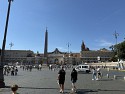
#11 - 5/24/2026 - Piazza del Popolo in Rome
|
|
|
#12 - 5/24/2026 - Piazza del Popolo in Rome just blocks away from the apartment where Joe A., Amanda and Holt were staying
|
|

|
#13 - 5/24/2026 - This is the Flaminio Obelisk located in the center of the Piazza del Popolo in Rome. It is an ancient Egyptian obelisk, originally carved from red granite and brought to Rome in 10 BC. The obelisk reaches a height of almost 37 meters (121 feet) when including its base and the cross at the top. The surrounding area features fountains and sculptures designed by Valadier in the early 19th century.
|
|

|
#14 - 5/24/26 - This is the Basilica of Santa Maria in Montesanto, a 17th-century Baroque church in Rome, located in the Piazza del Popolo. It is often called the "Church of the Artists" due to its proximity to the artistic community and historical traditions. The church is part of the famous "twin" churches in the plaza, though its dome is technically dodecagonal compared to its counterpart's circular one
|
|
|
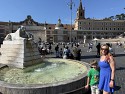
#15 - 5/24/2026 - Holt and Amanda in Piazza del Popolo in Rome just blocks away from the apartment where they were staying
|
|
|
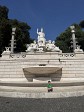
#16 - 5/24/2026 - Holt sitting at the base of the Fontana della Dea Roma (Fountain of the Goddess Roma) in the Piazza del Popolo in Rome
|
|
|
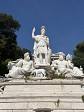
#17 - 5/24/2026 - The statues above the Fontana della Dea Roma (Fountain of the Goddess Roma), a neoclassical monument located on the east side of the Piazza del Popolo in Rome. The fountain features a central statue of the goddess Roma, fully armored and wearing a helmet. She is flanked by reclining figures representing the Tiber and Aniene rivers, with a statue of the she-wolf nursing Romulus and Remus at her feet. Designed by architect Giuseppe Valadier and sculpted by Giovanni Ceccarini, it was installed between 1822 and 1824 as part of the improvements to the piazza.
|
|
|
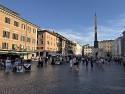
#18 - 5/24/2026 - Piazza Navona in Rome. The square itself is built on the site of the ancient Stadium of Domitian, preserving its oblong shape and vibrant, historic
|
|

|
#19 - 5/24/2026 - Piazza Navona in Rome. The square itself is built on the site of the ancient Stadium of Domitian, preserving its oblong shape and vibrant, historic On the right side, behind the fountain, with the umbrellas, is the famous Bar Tre Scalini Ristorante.
|
|

|
#20 - 5/24/2026 - Amanda and Holt in Piazza Navona in Rome. Circled in red on the far right is the famous Bar Tre Scalini Ristorante known for their famous Tartufo (chocolate truffle gelato)
|
|

Photo by Joe R. Luciano
|
#21 - 6/14/1999 - FLASHBACK Joe A. and Joe R. in front of the famous Bar Tre Scalini Ristorante known for their famous Tartufo (chocolate truffle gelato) in Piazza Navona in Rome
|
|

|
#22 - 5/24/26 - This is the Fountain of Neptune located at the northern end of Piazza Navona in Rome, Italy. Originally created by Giacomo Della Porta, the fountain features a central sculpture of Neptune fighting a sea creature, added in 1878 to complete the Baroque design. The square itself is built on the site of the ancient Stadium of Domitian, preserving its oblong shape and vibrant, historic atmosphere.
|
|

|
#23 - 5/24/26 - This is the Fountain of Neptune located at the northern end of Piazza Navona in Rome, Italy. Originally created by Giacomo Della Porta, the fountain features a central sculpture of Neptune fighting a sea creature, added in 1878 to complete the Baroque design. The square itself is built on the site of the ancient Stadium of Domitian,
|
|

|
#24 - 5/24/26 - The Fontana dei Quattro Fiumi (Fountain of the Four Rivers) located in Piazza Navona, Rome. Designed by Gian Lorenzo Bernini and unveiled in 1651, this Baroque masterpiece was commissioned by Pope Innocent X. The fountain features statues representing four major rivers from the four continents known at the time: the Nile, Danube, Ganges, and Rio de la Plata. An Egyptian obelisk stands in the center, crowned with the Pamphilj family emblem of a dove with an olive branch.
|
|

|
#25 - 5/24/26 - The Fontana dei Quattro Fiumi (Fountain of the Four Rivers) located in Piazza Navona, Rome. Designed by Gian Lorenzo Bernini and unveiled in 1651, this Baroque masterpiece was commissioned by Pope Innocent X. The fountain features statues representing four major rivers from the four continents known at the time: the Nile, Danube, Ganges, and Rio de la Plata. An Egyptian obelisk stands in the center, crowned with the Pamphilj family emblem of a dove with an olive branch.
|
|

|
#26 - 5/24/26 - Holt standing at the Fontana dei Quattro Fiumi (Fountain of the Four Rivers) located in Piazza Navona, Rome.
|
|

|
#27 - 5/24/26 - Holt washing up at one of the spigots in Piazza Navona, Rome.
|
|

|
#28 - 5/25/2026 - This image shows a crowd of people walking on a cobblestone plaza in Rome near the Roman Forum.
|
|

|
#29 - 5/25/2026 - The crowd of people touring the Roman Forum.
|
|

|
#30 - 5/25/2026 - These ruins are located in the Roman Forum in Rome. Temple of Castor and Pollux: The three remaining Corinthian columns belong to this temple, which was originally dedicated in 484 BC.
|
|

|
#31 - 5/25/2026 - These ruins are located in the Roman Forum in Rome. Temple of Castor and Pollux: The three remaining Corinthian columns belong to this temple, which was originally dedicated in 484 BC.
|
|

|
#32 - 5/25/2026 - This is the Temple of Vesta in the Roman Forum, an ancient edifice that once housed Rome's holy fire. The surviving ruins feature Corinthian columns built on a marble podium.It was originally a circular temple designed to resemble early Roman homes.
|
|

|
#33 - 5/25/2026 - The ancient ruins of the Roman Forum in Rome.
Basilica Aemilia: The row of columns in the foreground are the remains of the Basilica Aemilia, a civil basilica founded in 179 B.C..
Arch of Septimius Severus: In the background, the large white monument on the right is the Altare della Patria (Altar of the Fatherland), also known as the Victor Emmanuel II Monument
|
|

|
#34 - 5/25/2026 - The ancient ruins of the Roman Forum in Rome.
Basilica Aemilia: The row of columns in the foreground are the remains of the Basilica Aemilia, a civil basilica founded in 179 B.C..
The large white monument on the right is the Altare della Patria (Altar of the Fatherland), also known as the Victor Emmanuel II Monument and referred to as "The Wedding Cake"
|
|

|
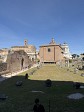
#35 - 5/25/2026 - The Roman Forum in Rome, Italy, a historic archaeological site filled with ancient ruins. The prominent arch in the center is the Arch of Septimius Severus, located near the heart of the Forum. In the background stands the Tabularium and the Capitoline Hill, offering a panoramic view of the ancient government buildings.
|
|
|
#36 - 5/25/2026 - A portion of the Roman Forum in Rome.
The Curia Julia (Center): The prominent, blocky brick building in the middle is the Curia Julia, which served as the official Senate House of Ancient Rome.
The Basilica Aemilia (Foreground): The grassy, column-lined path leading up to the Senate House contains the ruins of the Basilica Aemilia. This was a massive public hall used for business transactions, money changers, and judicial courts.
Arch of Septimius Severus & Capitoline Hill (Background Left): Peeking through just behind the ruins on the left is the white marble Arch of Septimius Severus and the bell tower of the Palazzo Senatorio located on the Capitoline Hill.
The Monument to Victor Emmanuel II (Background Right): The large, modern white marble monument visible in the distance is the Altare della Patria (Altar of the Fatherland).
|
|

|
#37 - 5/25/2026 - A portion of the Roman Forum in Rome.
The Curia Julia (Center): The prominent, blocky brick building in the middle is the Curia Julia, which served as the official Senate House of Ancient Rome.
The Basilica Aemilia (Foreground): The grassy, column-lined path leading up to the Senate House contains the ruins of the Basilica Aemilia. This was a massive public hall used for business transactions, money changers, and judicial courts.
Arch of Septimius Severus & Capitoline Hill (Background Left): Peeking through just behind the ruins on the left is the white marble Arch of Septimius Severus and the bell tower of the Palazzo Senatorio located on the Capitoline Hill.
The Monument to Victor Emmanuel II (Background Right): The large, modern white marble monument visible in the distance is the Altare della Patria (Altar of the Fatherland).
|
|

|
#38 - 5/25/2026 - The extensive ancient ruins of the Roman Forum and Palatine Hill, which served as the center of political and social life in ancient Rome. Key structures visible include the remains of the Basilica di Massenzio (Basilica of Maxentius and Constantine) and ancient temples. The area is a significant archaeological site located in the heart of Rome, Italy, containing ruins dating back to the 7th century BC
|
|

|
#39 - 5/25/2026 -The Roman Forum in Rome, Italy, a historic archaeological site filled with ancient ruins. The prominent arch in the center is the Arch of Septimius Severus, located near the heart of the Forum.In the background stands the Tabularium and the Capitoline Hill, offering a panoramic view of the ancient government buildings.
|
|

|
#40 - 5/25/2026 - This is the Arch of Septimius Severus, a white marble triumphal arch dedicated in 203 AD. It is located at the northwestern end of the Roman Forum. The arch commemorates the Parthian victories of Emperor Septimius Severus and his sons.It stands approximately 23 meters high and 25 meters wide.
|
|

|
#41 - 5/25/2026 - This is the Arch of Constantine in Rome, an historic triumphal arch located between the Colosseum and the Palatine Hill. Completed around 315 A.D., it was commissioned to commemorate Emperor Constantine I's victory over Maxentius at the Battle of the Milvian Bridge in 312 A.D. Standing 21 meters (69 feet) high, this is the largest Roman triumphal arch.
|
|

|
#42 - 5/25/2026 - This is the Temple of Antoninus and Faustina, an ancient Roman temple located in the Roman Forum in Rome. It was originally built in 141 AD by Emperor Antoninus Pius to honor his late wife.
|
|

|
#43 - 5/25/2026 - This is the Temple of Antoninus and Faustina, an ancient Roman temple located in the Roman Forum in Rome. It was originally built in 141 AD by Emperor Antoninus Pius to honor his late wife.
|
|

|
#44 - 5/25/2026 - The Temple of Romulus, a 4th-century Roman temple located within the Roman Forum. It was transformed into the vestibule of the Basilica of Santi Cosma e Damiano in the 6th century. The structure is famous for retaining its original bronze doors from 309 AD, which still feature a functioning lock
|
|

|
#45 - 5/25/2026 - A panoramic view of the Roman Forum in Rome, Italy, including the ruins of the Basilica of Maxentius and Constantine. Basilica of Maxentius: The prominent ruins in the background are the largest building in the Roman Forum, completed in the early 4th century AD. The photograph was taken from high vantage points on the Palatine Hill, offering panoramic views over the heart of ancient Rome. This area, along with the adjacent Colosseum, is a major tourist destination and often requires guided tours or skip-the-line tickets for entry.
|
|

|
#46 - 5/25/2026 - Amanda, Holt and Joe A. The ruins in the background are the Basilica of Maxentius (also known as the Basilica of Constantine), located in the Roman Forum in Rome. Constructed in the early 4th century AD, it served as a massive courthouse and a place for public assembly.
|
|

|
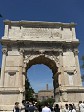
#47 - 5/25/2026 - This is the Arch of Titus, a 1st-century Roman triumphal arch located on the Via Sacra in the Roman Forum, Rome. It was constructed around 81 CE by the Emperor Domitian to commemorate the victories of his brother Titus, including the siege of Jerusalem.
|
|

|
#48 - 5/25/2026 - This is the Arch of Titus, a 1st-century Roman triumphal arch located on the Via Sacra in the Roman Forum, Rome. It was constructed around 81 CE by the Emperor Domitian to commemorate the victories of his brother Titus, including the siege of Jerusalem.
|
|

|
#49 - 5/25/2026 - This is the Arch of Titus, a 1st-century Roman triumphal arch located on the Via Sacra in the Roman Forum, Rome. It was constructed around 81 CE by the Emperor Domitian to commemorate the victories of his brother Titus, including the siege of Jerusalem.
|
|
|
#50 - 5/25/2026 - This is the Arch of Titus, a 1st-century Roman triumphal arch located on the Via Sacra in the Roman Forum, Rome. It was constructed around 81 CE by the Emperor Domitian to commemorate the victories of his brother Titus, including the siege of Jerusalem.
|
|

|
#51 - 5/25/2026 - This is the Arch of Titus, a 1st-century Roman triumphal arch located on the Via Sacra in the Roman Forum, Rome. It was constructed around 81 CE by the Emperor Domitian to commemorate the victories of his brother Titus, including the siege of Jerusalem.
|
|

|
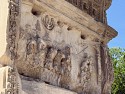
#52 - 5/25/2026 - This relief panel is located on the Arch of Titus in the ruins of the Roman Forum in Rome, constructed around 81 CE. The central focus is the quadriga, a four-horse chariot carrying the Emperor Titus during his triumphal procession. Titus is crowned by a winged figure of Victory (Nike). The goddess Roma leads the horses of the chariot.The arch commemorates Titus's victory in the Jewish War and the conquest of Jerusalem in 70 CE.
|
|
|
#53 - 5/25/2026 - This is a close-up photograph of a panel relief from the Arch of Titus, a triumphal arch located in Rome. The arch was constructed around 81 CE to commemorate Emperor Titus's victory in the Jewish War. The relief portrays Roman soldiers carrying spoils taken from the Temple in Jerusalem, most notably the menorah (seven-branched lampstand).
|
|

|
#54 - 5/25/2026 - In the back is the Temple of Venus and Roma and the Basilica of Santa Francesca Romana in Rome. Once the largest temple in ancient Rome, it was built by Emperor Hadrian between 121 and 135 AD and dedicated to the goddesses Venus Felix and Roma Aeterna. This Basilica tower is built onto the ruins of the temple, illustrating how ancient structures were repurposed in later centuries. The site is situated on the Velian Hill, positioned between the eastern edge of the Roman Forum and the Colosseum
|
|

|
#55 - 5/25/2026 - A closeup of the Temple of Venus and Roma and the Basilica of Santa Francesca Romana in Rome. Once the largest temple in ancient Rome, it was built by Emperor Hadrian between 121 and 135 AD and dedicated to the goddesses Venus Felix and Roma Aeterna. This Basilica tower is built onto the ruins of the temple, illustrating how ancient structures were repurposed in later centuries. The site is situated on the Velian Hill, positioned between the eastern edge of the Roman Forum and the Colosseum
|
|

|
#56 - 5/25/2026 - Approaching the famous Colosseum, a renowned ancient amphitheater in Rome. Completed in AD 80, it is the largest ancient amphitheater ever built and served as the heart of entertainment in Imperial Rome, hosting gladiator battles and public spectacles. The structure is famously composed of travertine limestone, tuff (volcanic rock), and brick-faced concrete.
|
|

|
#57 - 5/25/2026 - Approaching the famous Colosseum, a renowned ancient amphitheater in Rome. Completed in AD 80, it is the largest ancient amphitheater ever built and served as the heart of entertainment in Imperial Rome, hosting gladiator battles and public spectacles. The structure is famously composed of travertine limestone, tuff (volcanic rock), and brick-faced concrete.
|
|

|
#58 - 5/25/2026 - The famous Colosseum in Rome.
|
|

|
#59 - 5/25/2026 - The famous Colosseum in Rome.
|
|

|
#60 - 5/25/2026 - The famous Colosseum in Rome.
|
|

|
#61 - 5/25/2026 - The famous Colosseum in Rome.
|
|

|
#62 - 5/25/2026 - The side of the Colosseum in Rome.
|
|

|
#63 - 5/25/2026 - Entering the ground floor of the famous Colosseum in Rome.
|
|

|
#64 - 5/25/2026 - Walking around the ground floor of the famous Colosseum in Rome.
|
|

|
#65 - 5/25/2026 - Looking down at what used to be the arena floor of the famous Colosseum in Rome. This image shows the interior of the Colosseum in Rome, Italy, highlighting the exposed ruins of the subterranean hypogeum. The modern wooden platform seen on the left replaces the original arena floor, allowing tourists to walk above the underground chambers. The ruins consist of ancient stone archways and corridors that were once used to house gladiators, animals, and machinery before shows.
|
|

|
#66 - 5/25/2026 - Looking down at what used to be the arena floor of the famous Colosseum in Rome. This image shows the interior of the Colosseum in Rome, Italy, highlighting the exposed ruins of the subterranean hypogeum. The modern wooden platform seen on the left replaces the original arena floor, allowing tourists to walk above the underground chambers. The ruins consist of ancient stone archways and corridors that were once used to house gladiators, animals, and machinery before shows.
|
|

|
#67 - 5/25/2026 - Looking down at what used to be the arena floor of the famous Colosseum in Rome. This image shows the interior of the Colosseum in Rome, Italy, highlighting the exposed ruins of the subterranean hypogeum. The modern wooden platform seen on the left replaces the original arena floor, allowing tourists to walk above the underground chambers. The ruins consist of ancient stone archways and corridors that were once used to house gladiators, animals, and machinery before shows.
|
|

|
#68 - 5/25/2026 - Looking down at what used to be the arena floor of the famous Colosseum in Rome. The modern wooden platform seen on the left replaces the original arena floor, allowing tourists to walk above the underground chambers. The ruins consist of ancient stone archways and corridors that were once used to house gladiators, animals, and machinery before shows.
|
|

|
#69 - 5/25/2026 - Looking down at what used to be the arena floor of the famous Colosseum in Rome. This image shows the interior of the Colosseum in Rome, Italy, highlighting the exposed ruins of the subterranean hypogeum. The modern wooden platform seen on the left replaces the original arena floor, allowing tourists to walk above the underground chambers. The ruins consist of ancient stone archways and corridors that were once used to house gladiators, animals, and machinery before shows.
|
|

|
#70 - 5/25/2026 - Looking down at what used to be the arena floor of the famous Colosseum in Rome. This image shows the interior of the Colosseum in Rome, Italy, highlighting the exposed ruins of the subterranean hypogeum. The modern wooden platform seen in the foreground replaces the original arena floor, allowing tourists to walk above the underground chambers. The ruins consist of ancient stone archways and corridors that were once used to house gladiators, animals, and machinery before shows.
|
|

|
#71 - 5/25/2026 - A panoramic view of the interior of the Colosseum in Rome, Italy, which is the largest ancient amphitheatre ever built. The structure is made primarily of travertine limestone, volcanic rock, and brick-faced concrete. Construction was initiated by Emperor Vespasian around 72 AD and completed in 80 AD by his successor, Titus.
|
|

|
#72 - 5/25/2026 - Inside of the Colosseum in Rome. The center oval is actually the basement where everything was staged. It was covered by the arena floor. All around the sides were stone bleacher seats that seated about 50,000.
|
|

|
#73 - 5/25/2026 - Inside of the Colosseum in Rome. The center oval is actually the basement where everything was staged. It was covered by the arena floor. All around the sides were stone bleacher seats that seated about 50,000.
|
|

|
#74 - 5/25/2026 - The Colosseum, the largest standing ancient amphitheatre located in Rome, Italy. Construction of this elliptical structure began around 72 AD under Emperor Vespasian and was completed in 80 AD. The interior features the hypogeum, the complex network of underground tunnels and cages where gladiators and animals were held before contests. It is constructed primarily from travertine limestone, tuff (volcanic rock), and brick-faced concrete.
|
|
|
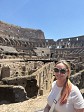
#75 - 5/25/2026 - Amanda inside the Colosseum in Rome.
|
|

|
#76 - 5/25/2026 - Holt, Amanda and Joe A. inside the Colosseum in Rome.
|
|

|
#77 - 5/25/2026 - A quick stop for a cappuccino and delicious chocolate dessert.
|
|
|
#78 - 5/25/2026 - The Fontana del Tritone (Triton Fountain), a Baroque masterpiece by Gian Lorenzo Bernini located in Rome. Created by Gian Lorenzo Bernini between 1642 and 1643 and situated in the center of Piazza Barberini. Commissioned by Pope Urban VIII (a member of the Barberini family), the fountain features symbols celebrating the family, including bees and their heraldic coat of arms supported by four dolphins. The statue depicts a muscular Triton kneeling on a large, open scallop shell, blowing into a seashell to spout water upward.
|
|

|
#79 - 5/25/2026 - The Fontana del Tritone (Triton Fountain), a Baroque masterpiece by Gian Lorenzo Bernini located in Rome. Created by Gian Lorenzo Bernini between 1642 and 1643 and situated in the center of Piazza Barberini. Commissioned by Pope Urban VIII (a member of the Barberini family), the fountain features symbols celebrating the family, including bees and their heraldic coat of arms supported by four dolphins. The statue depicts a muscular Triton kneeling on a large, open scallop shell, blowing into a seashell to spout water upward.
|
|

|
#80 - 5/25/2026 - Trevi Fountain in Rome. Be sure to watch the video on the Videos Page.
|
|

|
#81 - 5/25/2026 - Trevi Fountain in Rome. Be sure to watch the video on the Videos Page.
|
|

|
#82 - 5/25/2026 - Trevi Fountain in Rome. Be sure to watch the video on the Videos Page.
|
|

|
#83 - 5/25/2026 - Trevi Fountain in Rome. Be sure to watch the video on the Videos Page. Notice the bird in the upper right.
|
|

|
#84 - 5/25/2026 - In the center, the marble statue of Oceanus, sculpted by Pietro Bracci in the Late Baroque style. The sculpture features Oceanus standing atop a chariot pulled by sea horses and accompanied by tritons .It serves as the central figure of the Trevi Fountain in Rome, which was completed in 1762.
|
|

|
#85 - 5/25/2026 - Trevi Fountain in Rome. Be sure to watch the video on the Videos Page.
|
|

|
#86 - 5/25/2026 - Amanda, Holt and Joe A. in front of Trevi Fountain in Rome. Be sure to watch the video on the Videos Page.
|
|

|
#87 - 5/25/2026 - This is the Galleria Alberto Sordi, a famous shopping arcade located in Rome. It is situated on the Via del Corso in the historic center of Rome, near the Trevi Fountain and the Pantheon. Originally built in the Art Nouveau style and inaugurated in 1922, it features ornate stained-glass ceilings and detailed mosaic floors.
|
|

|
#88 - 5/25/2026 - This is the Column of Marcus Aurelius, a famous Roman victory monument located in Piazza Colonna, Rome. It was erected between 176 and 193 AD to commemorate Emperor Marcus Aurelius's military victories in the Marcomannic Wars. The monument stands approximately nearly 39 meters (128 feet) high including the base and statue: A detailed spiral relief frieze, measuring about 367 feet long, spirals 21 times around the column, depicting campaigns against Germanic and Sarmatian tribes. The top features a statue of Saint Paul, placed there by Pope Sixtus V in 1589.
|
|

|
#89 - 5/25/2026 - A closeup of the frieze carved into the Column of Marcus Aurelius in Piazza Colonna, Rome.
|
|

|
#90 - 5/25/2026 - The Church of St. Ignatius of Loyola (Sant'Ignazio) in Rome. People taking a selfie with the beautiful ceiling in a mirror (far left).
|
|

|
#91 - 5/25/2026 - The Church of St. Ignatius of Loyola (Sant'Ignazio) in Rome. This artwork is a celebrated masterpiece of Baroque illusionism. The fresco is titled Allegory of the Jesuits' Missionary Work (or The Apotheosis of Saint Ignatius), painted by the Jesuit brother Andrea Pozzo between 1685 and 1694. Pozzo used a technique called trompe-l'oeil (deceive the eye) to make the flat ceiling appear as a towering, three-dimensional architectural space filled with figures.
|
|

|
#92 - 5/25/2026 - The ceiling of the Church of St. Ignatius of Loyola (Sant'Ignazio) in Rome. This artwork is a celebrated masterpiece of Baroque illusionism. The fresco is titled Allegory of the Jesuits' Missionary Work (or The Apotheosis of Saint Ignatius), painted by the Jesuit brother Andrea Pozzo between 1685 and 1694. Pozzo used a technique called trompe-l'oeil (deceive the eye) to make the flat ceiling appear as a towering, three-dimensional architectural space filled with figures.
|
|

|
#93 - 5/25/2026 - Closeup of the "fake dome" in the Church of St. Ignatius of Loyola (Sant'Ignazio) in Rome. This artwork is a celebrated masterpiece of Baroque illusionism. The fresco is titled Allegory of the Jesuits' Missionary Work (or The Apotheosis of Saint Ignatius), painted by the Jesuit brother Andrea Pozzo between 1685 and 1694. Pozzo used a technique called trompe-l'oeil (deceive the eye) to make the flat ceiling appear as a towering, three-dimensional architectural space filled with figures.
|
|

|
#94 - 5/25/2026 - The main altar and the "fake dome" in the Church of St. Ignatius of Loyola (Sant'Ignazio) in Rome. This artwork is a celebrated masterpiece of Baroque illusionism. The fresco is titled Allegory of the Jesuits' Missionary Work (or The Apotheosis of Saint Ignatius), painted by the Jesuit brother Andrea Pozzo between 1685 and 1694. Pozzo used a technique called trompe-l'oeil (deceive the eye) to make the flat ceiling appear as a towering, three-dimensional architectural space filled with figures.
|
|

|
#95 - 5/25/2026 - A closeup of the main altar in the Church of St. Ignatius of Loyola (Sant'Ignazio) in Rome.
|
|

|
#96 - 5/25/2026 - A closeup of the "fake dome" in the Church of St. Ignatius of Loyola (Sant'Ignazio) in Rome. This artwork is a celebrated masterpiece of Baroque illusionism. The fresco is titled Allegory of the Jesuits' Missionary Work (or The Apotheosis of Saint Ignatius), painted by the Jesuit brother Andrea Pozzo between 1685 and 1694. Pozzo used a technique called trompe-l'oeil (deceive the eye) to make the flat ceiling appear as a towering, three-dimensional architectural space filled with figures.
|
|

|
#97 - 5/25/2026 - Amanda and Holt inside the Church of St. Ignatius of Loyola (Sant'Ignazio) in Rome. The church is famous for its "fake dome", an illusion painted on a flat canvas because the actual dome was never built due to financial constraints. Constructed between 1626 and 1650, it is a premier example of Baroque style in the heart of Rome.
|
|

|
#98 - 5/25/2026 - Holt and Joe A. inside the Church of St. Ignatius of Loyola (Sant'Ignazio) in Rome. The church is famous for its "fake dome", an illusion painted on a flat canvas because the actual dome was never built due to financial constraints. Constructed between 1626 and 1650, it is a premier example of Baroque style in the heart of Rome.
|
|

|
#99 - 5/25/2026 - The Macuteo Obelisk and the Pantheon located in the Piazza della Rotonda in Rome. Notice the moon in the upper left.
|
|

|
#100 - 5/25/2026 - The Pantheon in Rome, Italy, a historic Roman temple now operating as a church. Completed around 126 AD under Emperor Hadrian, it features massive Corinthian columns and a large portico. The building is renowned for its vast dome, which remains the largest unreinforced concrete dome in the world. .It is located in the Piazza della Rotonda, a bustling public square popular with tourists.
|
|

|
#101 - 5/25/2026 - The Pantheon in Rome, Italy, a historic Roman temple now operating as a church. Completed around 126 AD under Emperor Hadrian, it features massive Corinthian columns and a large portico. The building is renowned for its vast dome, which remains the largest unreinforced concrete dome in the world. It is located in the Piazza della Rotonda, a bustling public square popular with tourists.
|
|

|
#102 - 5/25/2026 - The Macuteo Obelisk, an ancient Egyptian obelisk originally from Heliopolis. In 1711 Pope Clement XI moved the obelisk to its current position atop the Fontana del Pantheon (Fountain of the Pantheon) located in the Piazza della Rotonda in Rome opposite the Pantheon. The fountain was originally commissioned by Pope Gregory XIII in 1575, with the basin designed by Giacomo della Porta.
|
|

|
#103 - 5/25/2026 - The Macuteo Obelisk, an ancient Egyptian obelisk originally from Heliopolis. In 1711 Pope Clement XI moved the obelisk to its current position atop the Fontana del Pantheon (Fountain of the Pantheon) located in the Piazza della Rotonda in Rome opposite the Pantheon. The fountain was originally commissioned by Pope Gregory XIII in 1575, with the basin designed by Giacomo della Porta.
|
|

|
#104 - 5/25/2026 - Sott'er Celo De Roma (On An Evening In Roma). La Passeggiata, the evening stroll in Italy in the famous Piazza Navona in Rome, location of the famous Bar Tre Scalini. Notice the moon in the upper left.
|
|

|
#105 - 5/25/2026 - Sott'er Celo De Roma (On An Evening In Roma). La Passeggiata, the evening stroll in Italy in the famous Piazza Navona in Rome, location of the famous Bar Tre Scalini. Notice the moon in the upper left.
|
|

|
#106 - 5/25/2026 - Amanda and Holt at Bar Tre Scalini Ristorante in Piazza Navona about to enjoy an evening dessert.
|
|

|
#107 - 5/25/2026 - Sott'er Celo De Roma (On An Evening In Roma). Holt enjoying a delicious Tartufo at the famous Bar Tre Scalini Ristorante in Piazza Navona in Rome,
|
|

|
#108 - 5/25/2026 - Sott'er Celo De Roma (On An Evening In Roma). La Passeggiata, the evening stroll in Italy on the famous Spanish Steps (Scalinata di Trinità dei Monti) and the Piazza di Spagna in Rome.
The historic Trinita dei Monti Church situated at the top of the steps, which was constructed under the patronage of the Bourbon kings of France.
Fontana della Barcaccia is located at the base of the steps, this Baroque-style fountain was designed by Pietro Bernini and completed between 1627 and 1629. The area is a prominent landmark and social gathering place.
|
|

|
#109 - 5/25/2026 - Sott'er Celo De Roma (On An Evening In Roma). La Passeggiata, the evening stroll in Italy on the famous Spanish Steps (Scalinata di Trinità dei Monti) and the Piazza di Spagna in Rome.
The historic Trinita dei Monti Church situated at the top of the steps, which was constructed under the patronage of the Bourbon kings of France.
|
|
|
#110 - 5/25/2026 - Sott'er Celo De Roma (On An Evening In Roma). On the way back to their apartment, La Passeggiata, the evening stroll in Italy on Via Condotti, a renowned street famous for its luxury fashion boutiques. The street is situated in the Tridente district and leads directly to the Spanish Steps. It is home to numerous flagship stores for high-end brands and often referred to as Italy's Rodeo Drive. The area is a bustling center for shopping and strolling, especially popular in the evening.
|
|
 Back to Slide Shows Menu
 Go to Home Page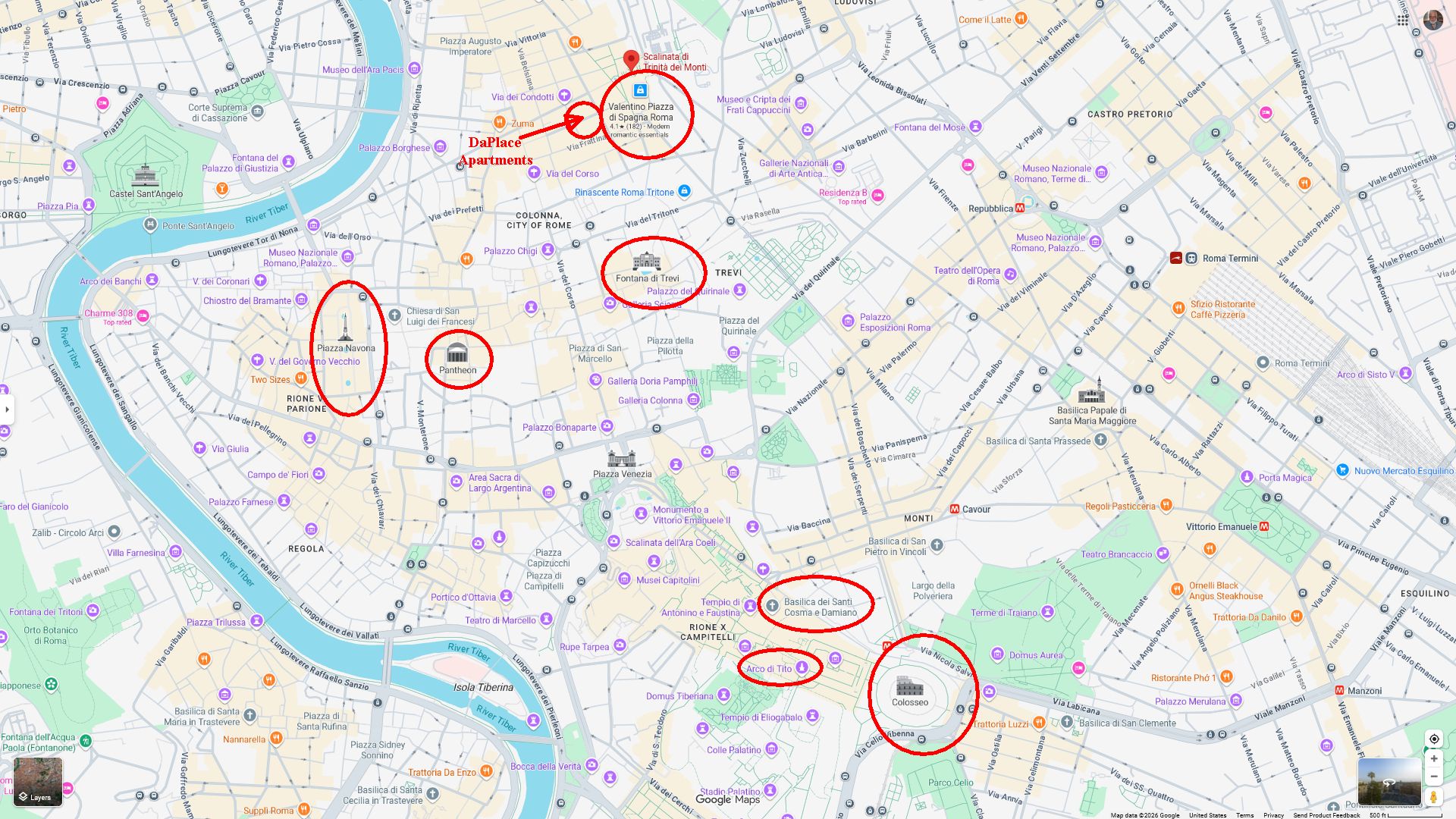
 Email Us